

Pricing varies by volume and account type.
Get Your Custom Pricing — Free AccountAlready have an account? Log in here

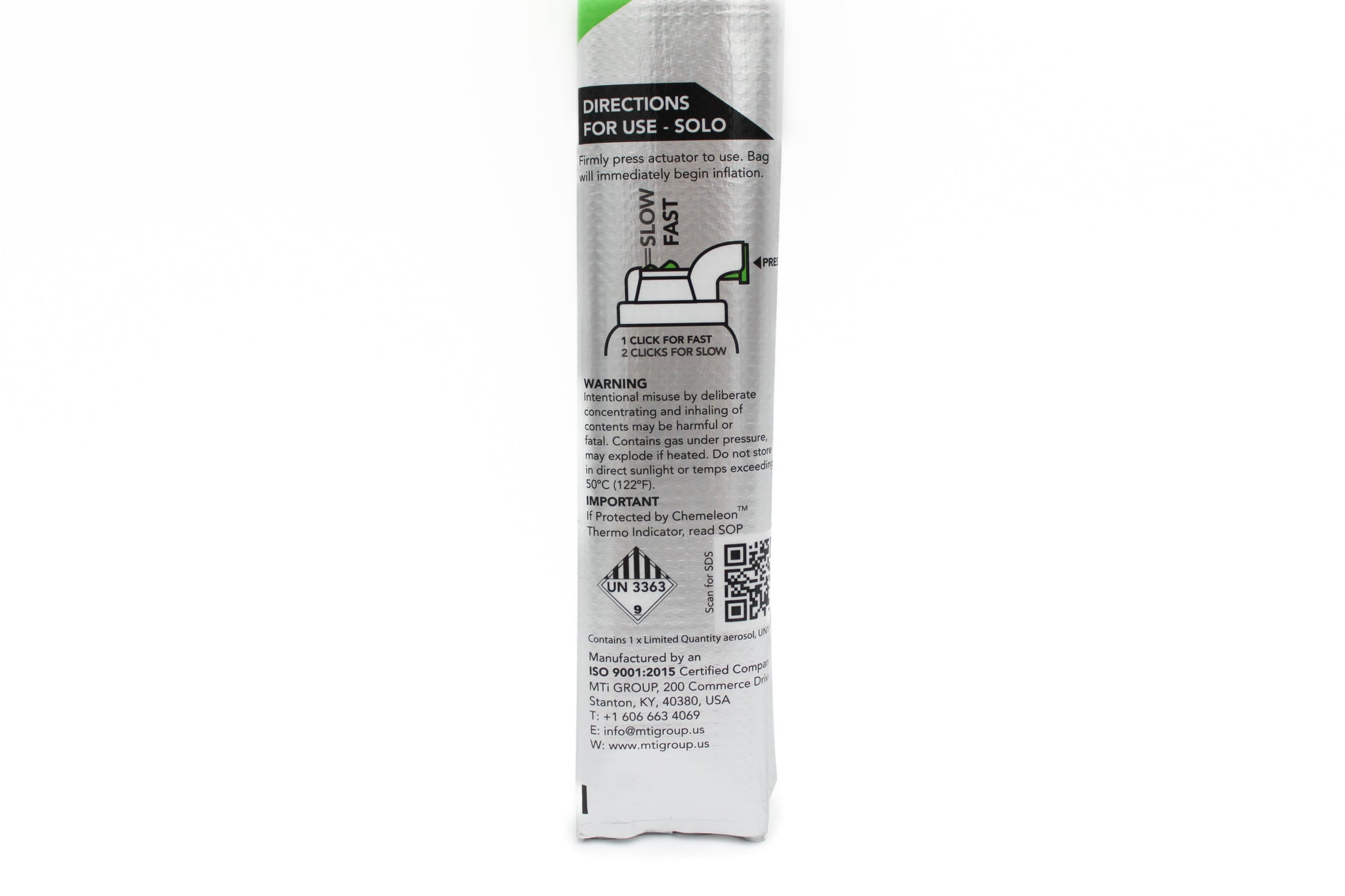
Two-speed inflation

Gas tight seal

High visibility scuff

Chameleon label

Quick installation

Global application
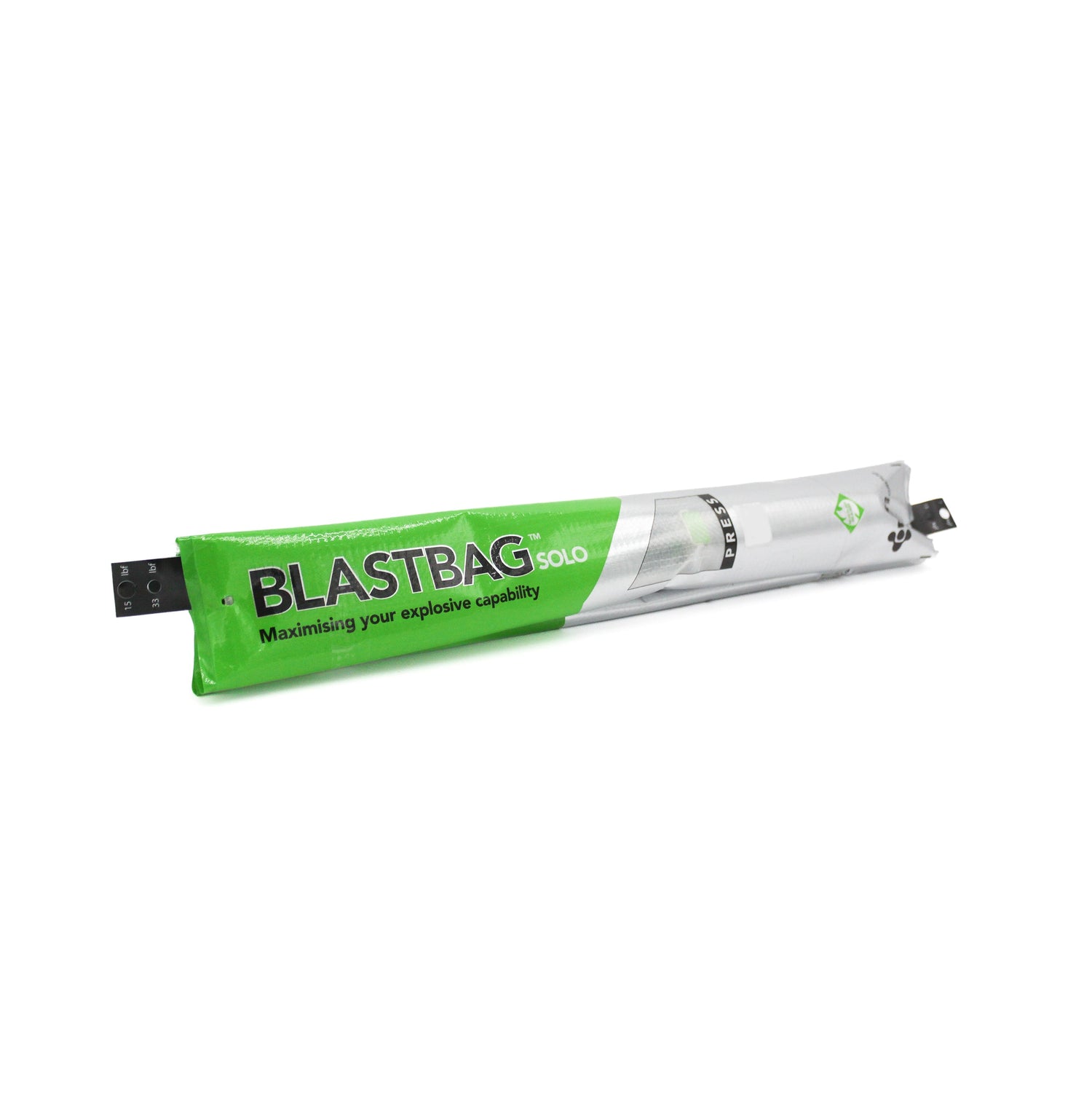
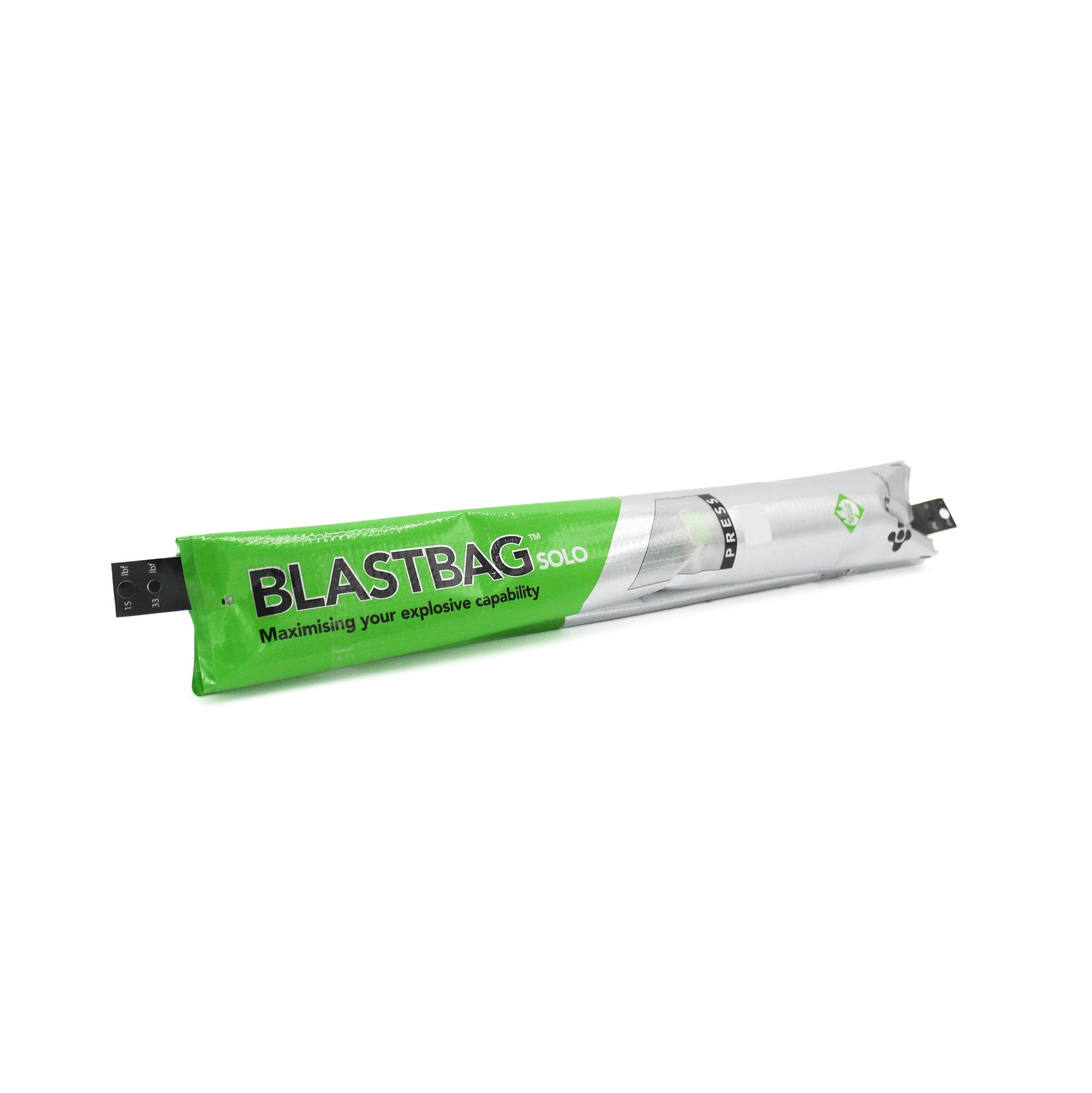
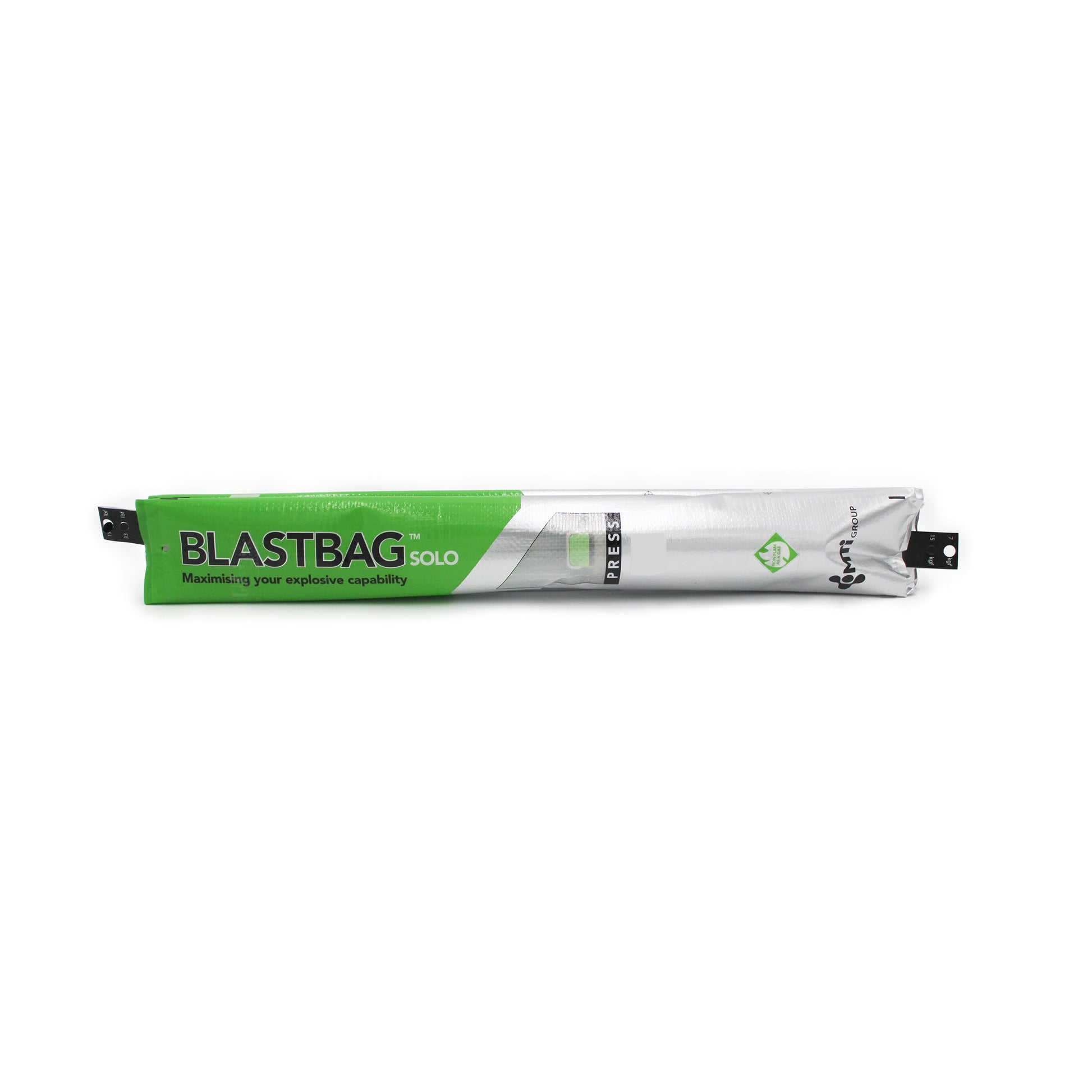
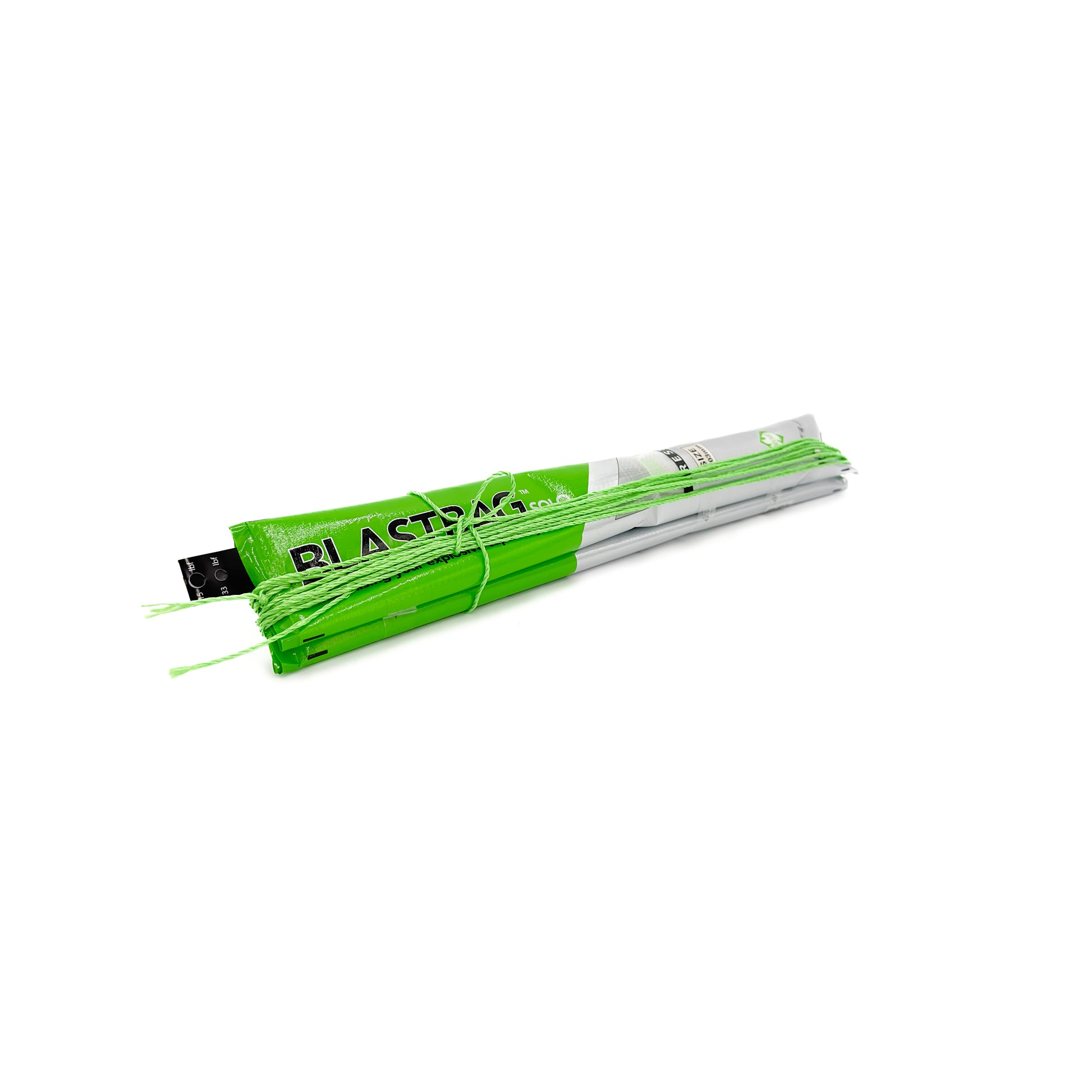
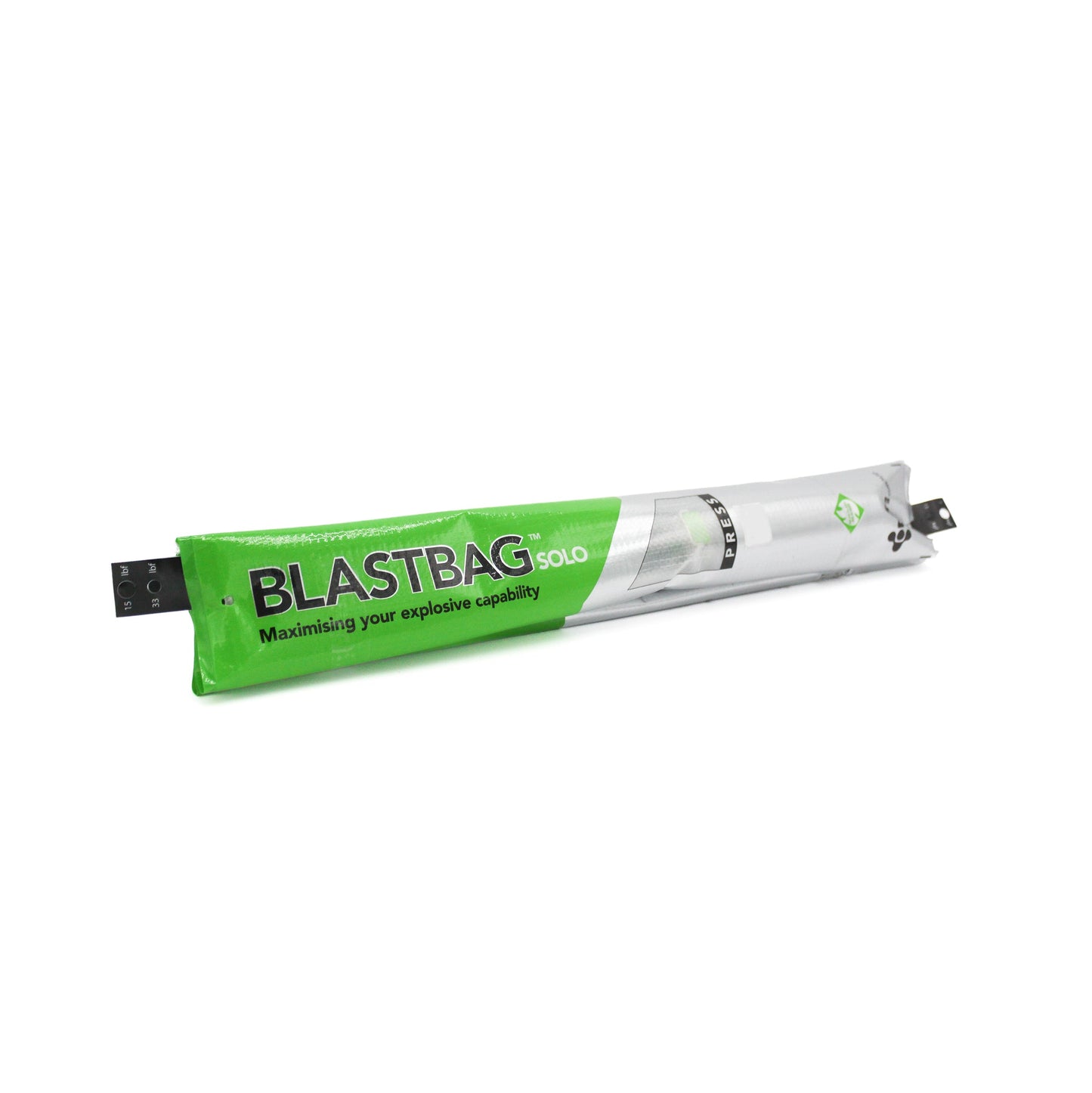
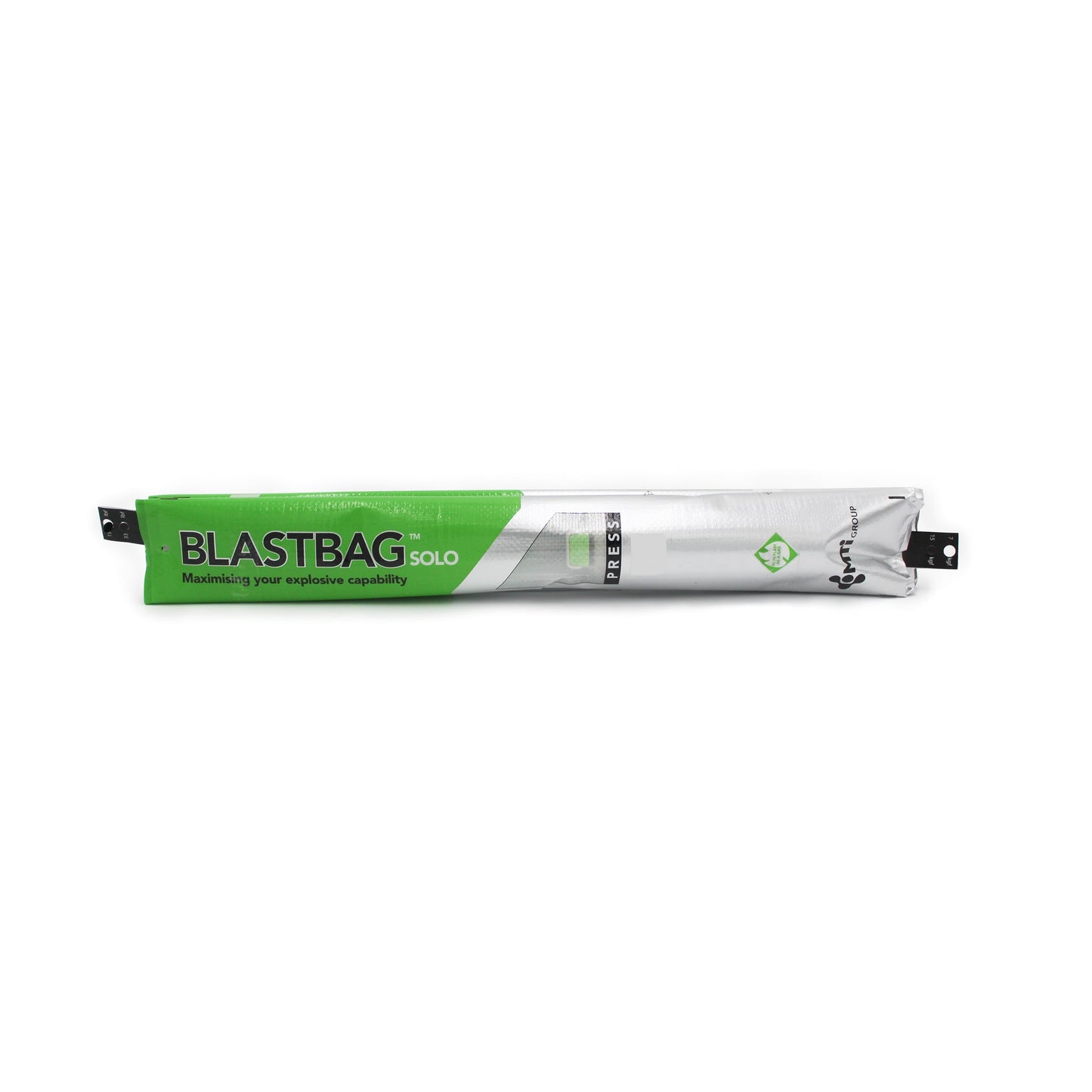
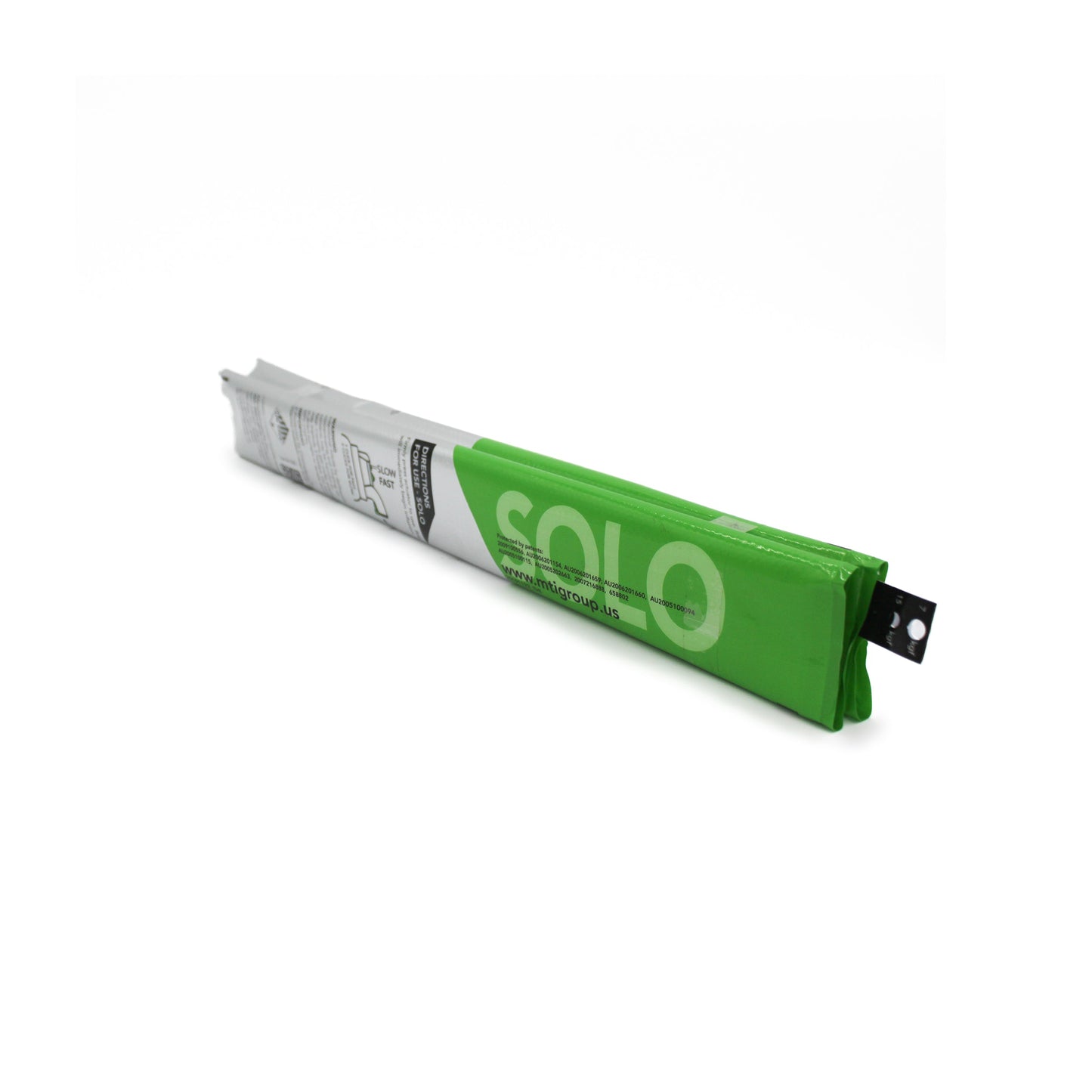
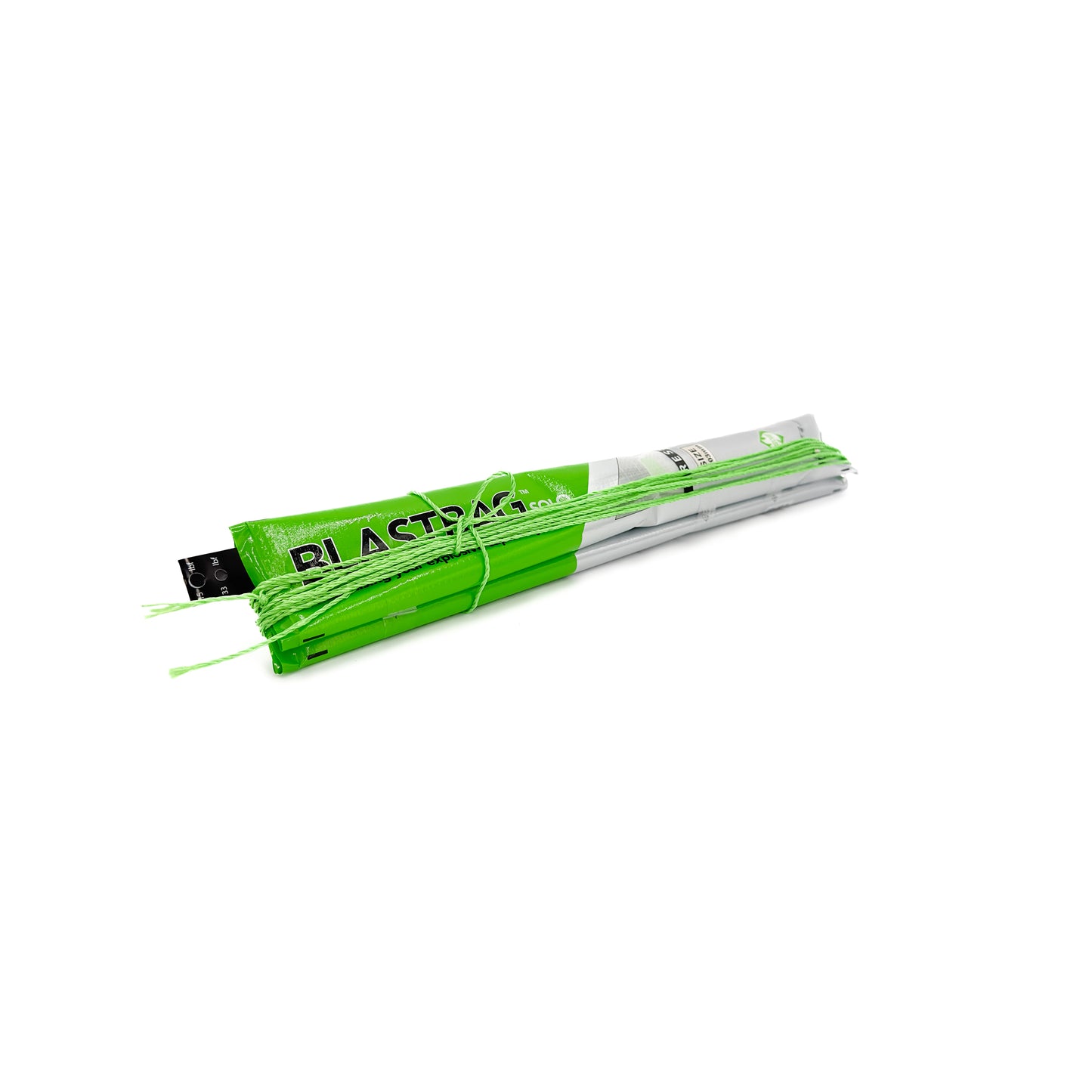
BLASTBAG™ SOLO is the most used gasbag of its kind in the world for quick and safe blasthole plugging. It is a single-use, reliable BLASTBAG ™ used to plug blast holes, hold an air deck, or block off a void. It comes ready to go with a built-in aerosol can. The can uses non-flammable, non-toxic gas and has a 2-speed actuator, so you can inflate it slow or fast depending on the job.
Inside the outer bag are two sealed bladders. They stay airtight and grip the borehole wall once the gas starts flowing. This helps the bag stay in place, even in wet or broken ground.
Each unit comes with a length of string, so you can lower it to depth and control it while it inflates. Once it grabs the hole wall, you can let it finish inflating and move to the next hole. It works the same in surface or underground sites.
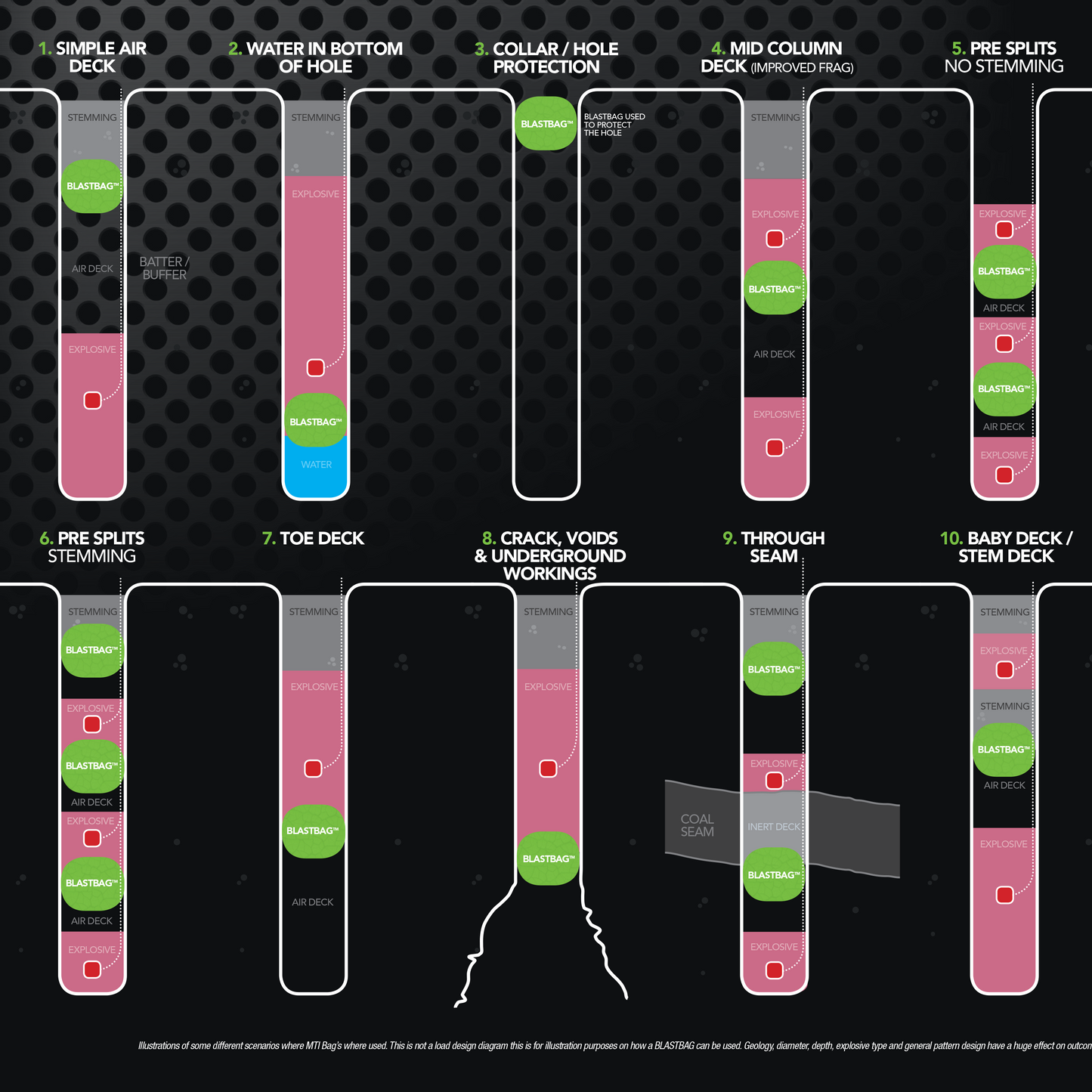
Use it when you need a quick, reliable plug. Use it when you need a consistent air deck. And use it when you need to seal a void before loading.

 Terms & Conditions

Non-Flammable

Non-Toxic

Non-Sparking

How It Works
Built-In Aerosol Inflation
2-Speed Actuator
Dual Bladder System
Simple Positioning
Works in Any Conditions
Complex Geology
Fractured formations, loose fill, irregular hole geometry—SOLO adapts to variable conditions. The dual bladder system compensates for geological variance on every deployment.
Extreme Temperatures
Rated -40°C to 70°C (-40°F to 158°F). Deploy it in Arctic conditions or desert heat. BLASTBAG™ SOLO inflates consistently in both hot and cold environments.
Surface or Underground
Open pit or underground mine—same deployment. Same performance. Same reliable plug regardless of working depth or environment.
BLASTBAG™ SOLO Specifications
Size Chart
| Model | Hole Size (Imperial) | Hole Size (Metric) | Qty/Box | Item # |
|---|---|---|---|---|
| Quokka | 4–4.5" | 100–115 mm | Box of 35 | 03-081 |
| Koala | 6.5" | 165 mm | Box of 30 | 03-080 |
| Bilby | 8" | 203 mm | Box of 30 | 03-088 |
| Platypus | 9" | 230 mm | Box of 25 | 03-086 |
| Wombat | 10–5/8" | 270 mm | Box of 25 | 03-089 |
| Emu | 12–1/4" | 311 mm | Box of 20 | 03-090 |
General Specifications
Which Size Do I Need?
Match the BLASTBAG™ SOLO model to your blast hole diameter. Measure the drilled hole at the collar and select the nearest size. SOLO expands to fill irregular or oversized holes—pick a BLASTBAG™ that is closest to your hole diameter. For example: If you have an 8" blast hole → Use a Bilby. If you have a 6.5" blast hole → Use a Koala. The dual bladder system compensates for slight variance in hole size. If you’re between sizes, contact our technical team for site-specific recommendations.
BLASTBAG™ SOLO vs Competitors
| Feature | BLASTBAG™ SOLO | Competitor Gas Bags |
|---|---|---|
| Inflation Method | Dual-speed aerosol (one-handed) | Chemical reaction or standard aerosol |
| Deployment Time | 30–60 seconds | Inconsistent |
| Latch Technology | Patented horizontal plunge latch (works in extreme temps) | Standard latches (may fail in hot/cold weather) |
| Speed Selection | Choose fast or slow | Inconsistent Speed |
| Equipment Needed | None | None |
| DG Classification | Non-Flammable Class 9 Aerosol | Flammable Class 9 Aerosol or non-DG (chemical) |
| Bladder System | Two independently sealed gas-tight bladders | Single or dual bladder (varies by brand) |
| Temperature Performance | Consistent performance in all temperatures | Inconsistent performance |
| Consistency (Shot-to-Shot) | Highest | Low to Medium |
Why BLASTBAG™ SOLO
BLASTBAG™ SOLO fixes the common problems with other gas bags. Patented latch technology works in any weather — reliable in extreme temperatures, no inconsistent inflation. Dual-speed means you can choose your inflation speed. Two sealed bladders mean zero leaks. Single-handed operation gets bags in holes faster.
What Sets SOLO Apart
Other gas bags are inconsistent in variable temperatures or have high failure rates. The BLASTBAG™ SOLO delivers consistent inflation regardless of conditions. Fast deployment in complex geology, fractured ground, and high-frequency blasting where reliability matters. Best for sites where you can't afford downtime from product failures or inconsistent results.
How to Install
Step-by-Step Installation
Step 1: Pick the Right Size
Select the correct BLASTBAG SOLO for your hole diameter. Remove from carton just before use. Keep the carton in your vehicle and use the punch-out port for access.
Step 2: Mark Your Depth
Decide what depth the bag needs to sit at. Prepare your drop cord with an extra 1.5 m (5 ft) so you're not bending over the collar.
Step 3: Attach Drop Cord
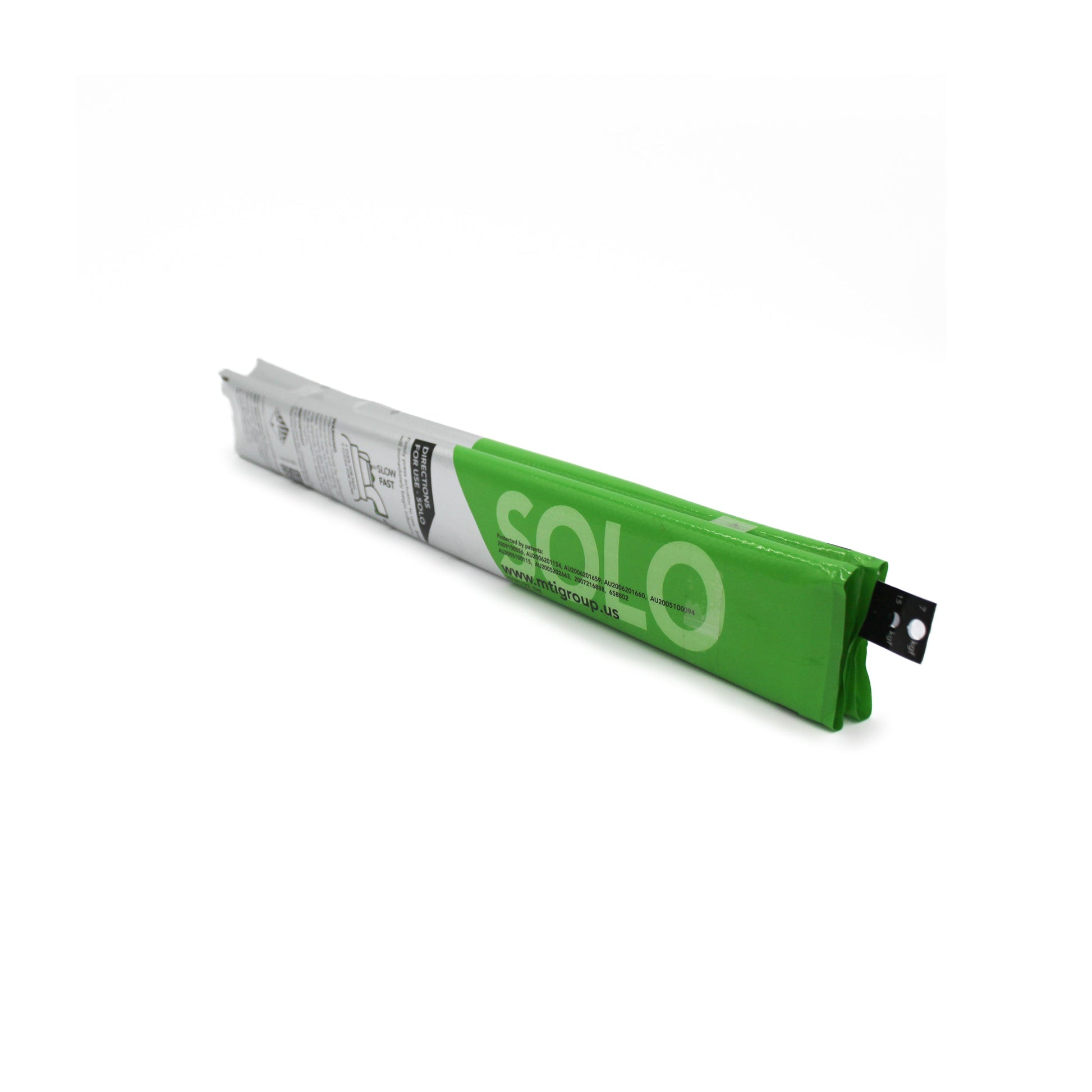
Tie or clip the drop cord to the hang tab. Top hole for shallow holes (breaks at 7 kgf / 15 lbf). Bottom hole for deep holes (breaks at 15 kgf / 33 lbf).
Step 4: Activate the Aerosol
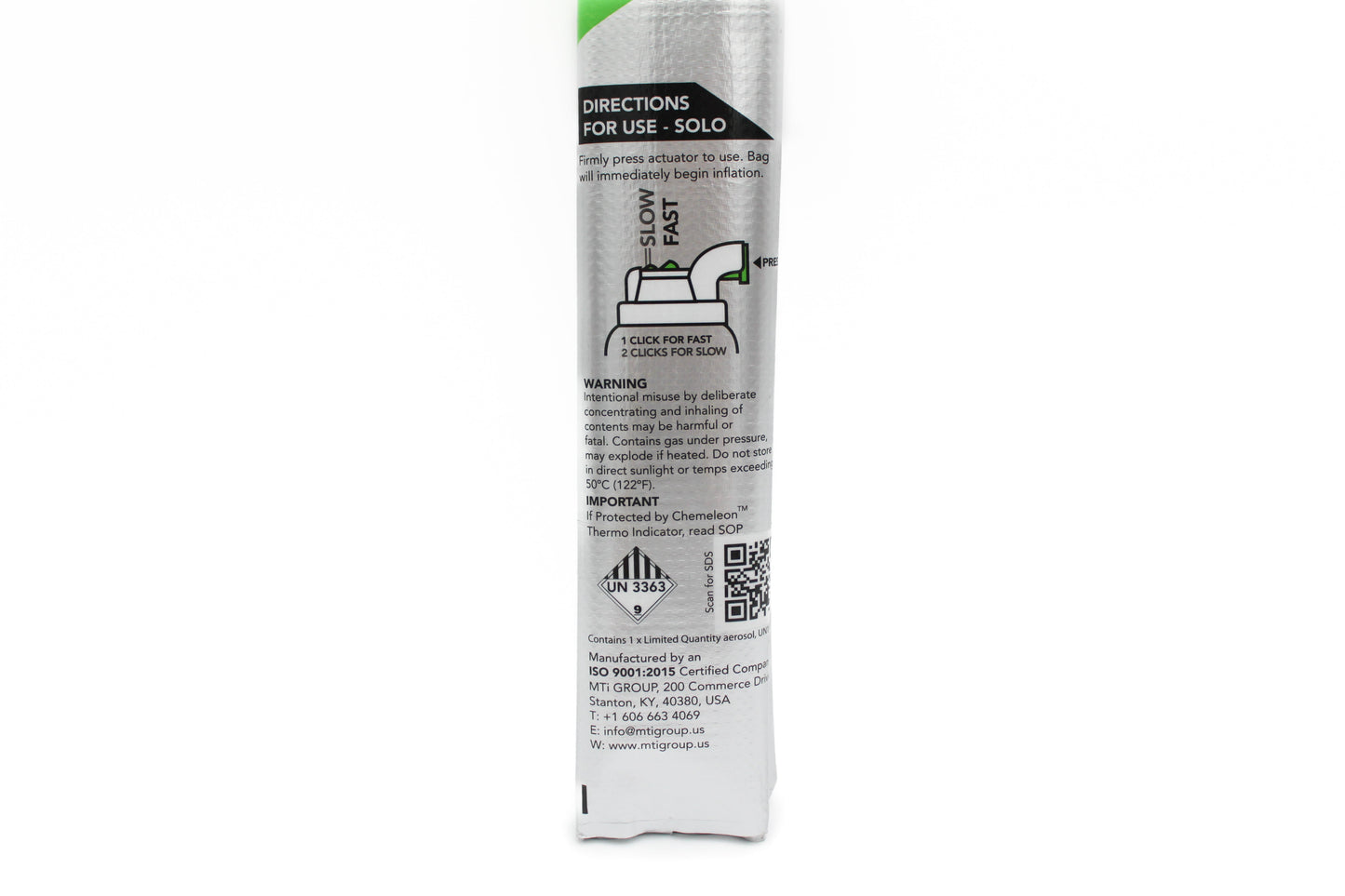
Grip the canister and push the latch with your thumb until it clicks. One click for fast inflation. Two clicks for slow. Once latched, inflation can't be stopped.
Step 5: Lower to Depth
Quickly lower the SOLO down hole to your target depth until the drop cord is tight. The bag inflates as it goes down.
Step 6: Confirm Grip
Tug the drop line or tether. The bag should grip the hole walls. If using a dropline, a firm pull upward will break the tag and let you retrieve the cord.
Step 7: Protect and Wait
Kick in 2 boot loads of drill cuttings to protect the bag. In typical conditions (above 15°C / 59°F), wait 15 minutes before loading. Loading time varies with ground conditions, altitude, and temperature.
Pro Tips
- Cold Weather: In freezing conditions, keep the BLASTBAG box above freezing if possible. The liquefied propellant converts to gas more efficiently when warm. If it's colder than -27°C (-17°F), the propellant won't convert to gas—keep the environment above -20°C (-4°F).
- Extreme Cold: Remove BLASTBAG from a heated area just before use (make sure heated area is below 50°C / 122°F). A permanent tether is recommended in freezing conditions.
- Poor Ground: If you've got fractured ground or need to support a heavy load, use 2 bags to increase wall contact and reduce slippage.
- Shallow Holes: If the bag needs to be removed from a shallow hole, use a retrieval tool. Pierce the bag after it deflates, then pull it out.
Storage & Safety
Keep It Cool
Store below 50°C (122°F) in a well-ventilated area. Keep out of direct sunlight. Aerosol cans can explode if they overheat. If you suspect a BLASTBAG has overheated, alert your crew and supervisor. Let it cool before handling.
Transport Classification
Road/Rail: UN 3363 'Dangerous Goods in Apparatus', HAZCHEM Code 1Z. Sea/Air: UN 1950 Class 2 Dangerous Good, HAZCHEM Code 2YE. Follow DG transport requirements for your region.
Check Before You Use
If the bag has a Chemelon™ label, check it before handling. If it reads DANGER or HOT, don't approach it. Inspect each bag for damage before deployment. Dents, leaks, or visible damage means don't use it.
Cold Weather Storage
In freezing conditions, keep the box you're deploying from above freezing if possible. The propellant converts to gas more efficiently when it's warm. Below -27°C (-17°F), the propellant won't convert—keep the environment above -20°C (-4°F).

For Open Pit Mine Supervisors
Seal Holes Fast. Improve Every Blast.

Built for High-Output Operations
Speed Meets Reliability.

Proven in the Field
Trusted Across Major Mine Sites.
Case Studies
View all-

38% Finer Fragmentation. 15% Less Oversize. Her...
A 90-million-tonne iron ore mine in South America was dealing with flyrock, oversize, and poor fragmentation. By adding Rockrivets to their stemming design, they cut P80 by 38% and reduced...
38% Finer Fragmentation. 15% Less Oversize. Her...
A 90-million-tonne iron ore mine in South America was dealing with flyrock, oversize, and poor fragmentation. By adding Rockrivets to their stemming design, they cut P80 by 38% and reduced...
-

Reduce Ore Loss & Dilution in Mining
Discover how a major South American copper mine cut ore loss by 36.6% and saved over $42,000 using MTi’s BLASTBAG™ technology.
Reduce Ore Loss & Dilution in Mining
Discover how a major South American copper mine cut ore loss by 36.6% and saved over $42,000 using MTi’s BLASTBAG™ technology.
-

Flyrock Reduction in Surface Blasting
BLASTBAG™ air decking cut flyrock incidents to near zero and reduced charge per hole by 33 lbs, enabling safer blasting at a West African gold mine.
Flyrock Reduction in Surface Blasting
BLASTBAG™ air decking cut flyrock incidents to near zero and reduced charge per hole by 33 lbs, enabling safer blasting at a West African gold mine.


Learn
View all-

What is Air Decking in Blasting?
Air decking can let you use less explosive while improving fragmentation, reducing flyrock, and controlling vibration. Here's how it works — and why more sites are making the switch.
What is Air Decking in Blasting?
Air decking can let you use less explosive while improving fragmentation, reducing flyrock, and controlling vibration. Here's how it works — and why more sites are making the switch.
-

How to Prevent Flyrock on Your Site
Flyrock can damage equipment, shut down sites, and can be fatal. One bad shot can end your project. You know what causes it. Fixing it is different.
How to Prevent Flyrock on Your Site
Flyrock can damage equipment, shut down sites, and can be fatal. One bad shot can end your project. You know what causes it. Fixing it is different.
-

Can You Diagnose Blast Issues By Simply Looking...
Learn how to read the muck pile after blasting to spot fragmentation, throw, and stemming issues before the next shot.
Can You Diagnose Blast Issues By Simply Looking...
Learn how to read the muck pile after blasting to spot fragmentation, throw, and stemming issues before the next shot.


